Topic 1: Origami: The Key to Bridging Culture, Art, and Technology

Prof. Osamu Tabata (田畑 修), IEEE Life Fellow
- Executive Vice President of Kyoto University of Advanced Science, Japan
- IEEE Life Fellow, and IEEJ Fellow
- Editor of Microsystems & Nanoengineering
Prof. Dr. Osamu Tabata obtained his M.Sc. and Ph.D. in Engineering from the Nagoya Institute of Technology in 1981 and 1993, respectively. His career spans 15 years in the private sector and more than three decades in academia, most recently at Kyoto University. Beginning in 2018, he contributed to the establishment and design of the new Faculty of Engineering at the Kyoto University of Advanced Science (KUAS), where he played a central role in shaping the university’s unique engineering curriculum, including the Capstone Project. He served as the founding Dean of the Faculty of Engineering, KUAS from April 2020 to March 2025 and has been the Executive Vice President (EVP) since April 2025.
Prof. Dr. Tabata serves as an editor of Microsystems & Nanoengineering and as a member of the editorial board of Sensors and Actuators. He is also an active program committee member for numerous international conferences. He has been focusing on Micro/Nano Electro Mechanical Systems (MEMS/NEMS) and DNA nanotechnology. His long-term goal is to establish SENS (Synthetic Engineering for Nano Systems) and to realize novel nano‑systems by integrating functional components of various scales—from nanometers to micrometers—onto MEMS substrates only a few square millimeters in size.
As EVP, Prof. Dr. Tabata is responsible for internationalization, student recruitment, and strengthening the university’s engagement with society. He looks forward to welcoming the next generation of engineers and is committed to equipping students with the skills needed to thrive in the modern world of engineering.
Topic 2: Fabrication of Perovskite Solar Cells/Modules with Environmentally Friendly Materials/Methods
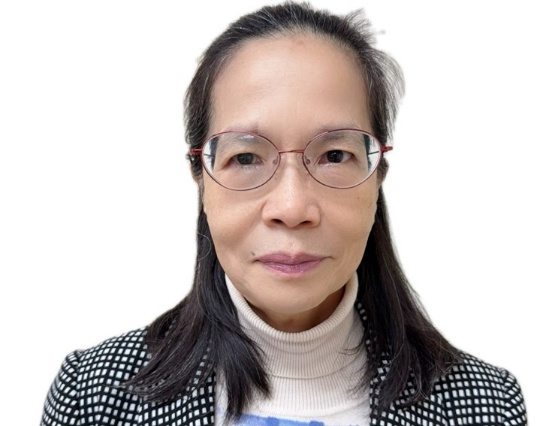
Prof. Chun-Guey Wu (吳春桂), Distinguished Professor
- Dean of college of Science, National Central University (NCU), Taiwan
- Academic Medal from Chemical Society Located in Taipei (CSLT)
- Outstanding Tech-transition Contribution Award, Ministry of Science and Technology (MIST)
- Y. Z. Hsu Scientific Award
Dr. Chun-Guey Wu is currently a distinguished professor and Dean of college of Science, National Central University (NCU), Taiwan. She started her career at Department of Chemistry, NCU in 1994 as an associated professor, then promoted to be a full professor in 2000. She is also a Joint appointment professor of Institute of Chemistry and advisory committee member of Center for Sustainability Science, Academia Sinica, Taiwan. Professor Wu is also active in government sector to service as a Coordinator of Nature Science division and Chemistry division of National Science and Technology Council (NSTC), Taiwan.
The contributions of professor Wu’s research cover electrooptical materials and devices. The high-performance conjugated polymer capacitors her developed had transferred to industry. The thiophene building unit she used for ruthenium-based sensitizers is the most common unit for high-efficiency sensitizers for dye sensitized solar cells. She first reported the preparation of high-photovoltaic performance perovskite film under ambient atmosphere, and the first one to prove that bulk heterojunction structure can be adopted in perovskite solar cells.
She has received several Awards, including Stanford top 2% Scientists, Academic Medal from Chemical Society Located in Taipei (CSLT), Outstanding Tech-transition Contribution Award, Ministry of Science and Technology (MIST), Outstanding Research Award, MIST, Y. Z. Hsu Scientific Award, Outstanding Tech-transition Contribution Award, NSTC, taiwan, Excellent Achievement Award for Issued Patent and Excellent Achievement Award for Technique Transfer, NCU.